Truth, Reality and Faith
Knowledge, perception and the first crisis of reality
by Dr. phil. Yusuf Ayar
Overview
When a human being tries to understand their existence, they unknowingly begin with an assumption: that what they see is real. But perception is not reality itself; it is an interpreted version of reality, filtered through biological limits, mental habits and cultural influences. The Ayar Theory begins exactly here: not in the search for certainty, but in finding the right position toward truth.
Knowledge, Perception and the First Crisis of Reality
What the human sees is not "the truth," but "interpreted reality." This is the first fracture between knowledge and truth. When a person sees an object, they do not see the object itself but a mental representation of it: incomplete, limited and fallible. Mistaking this representation for truth is where epistemological error begins, and the human builds an entire system of thought on that flaw, eventually calling it "certain truth."
Ayar Theory: First Rule
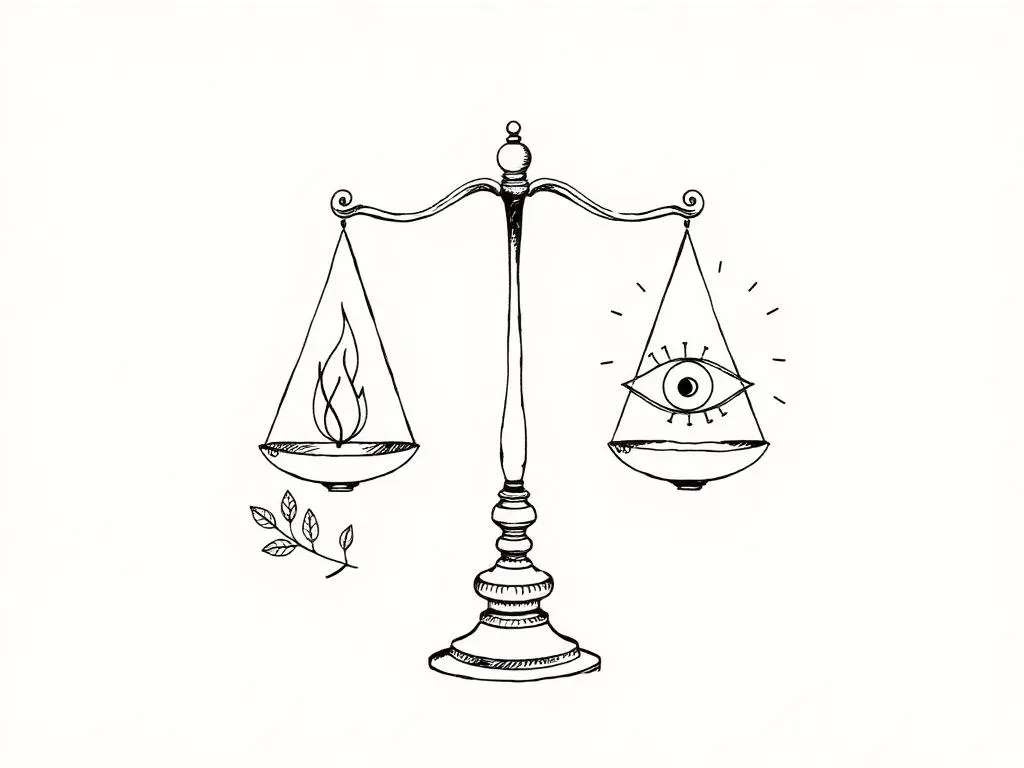
A human being should neither accept what they see as absolute truth nor reject it entirely. Truth is to be sought between these two extremes. Reject perception completely and knowledge becomes impossible. Treat perception as absolute and error becomes inevitable. The right approach is to accept perception as data, but not as truth.
Theory of Conscience: First Appearance
Humans do not only see; they also evaluate inwardly. This evaluation cannot be explained by reason alone. When a person sees something, they often judge whether it is right or wrong not just by thinking but by feeling. This feeling is not learned from outside. This feeling is conscience, the inner balance mechanism that orients the human toward truth. But conscience is not an absolute guide; it is a potential guide. It can be suppressed, ignored or misled.
From Perception to Doubt: The Collapse of Certainty
Once the human questions the reliability of perception, all knowledge becomes contested. The question shifts from "Is what I see correct?" to the deeper "What can I really know?" Humans crave certainty because it grants security and control, but they lack the tools to attain it: senses err, reason draws wrong conclusions, experience remains incomplete.
Doubt: Crisis or Beginning?
Doubt seems negative at first, but properly placed it is not destruction but purification. It clears away false certainties. The Ayar Theory distinguishes constructive doubt (which questions, investigates, seeks a conclusion) from destructive doubt (which questions endlessly, never arrives, and leads into passivity). Doubt is a tool, not a goal.
The Limit of Reason
Reason is powerful, but not unlimited. It analyses, compares and concludes, but it depends on data. If the data is wrong, the conclusion is wrong. Reason is not an absolute authority.
Theory of Conscience: Deepening
Reason produces options. Conscience makes the choice. Conscience is the inner measure that, among the options reason offers, directs the human toward the one closest to truth. Without this interplay, reason loses its direction.
Approach Instead of Certainty
A great transformation occurs: "I cannot know the absolute truth, but I can approach it." From this comes the Third Rule: Truth is not something to be possessed, but something to be approached. This understanding saves the human from two great errors: arrogance ("I know") and despair ("Nothing can be known").
Is Certain Knowledge Possible? Time and Knowledge
Knowledge is bound to time. When a person says they "know" something, they actually know its past form. The only domain of certainty is the past, and even the past is mediated through memory and records, which are themselves fallible. The future is not knowledge; it is probability. The Ayar Theory warns against two errors: the deterministic ("Everything is fixed") and the chaotic ("Nothing can be known").
Theory of Conscience: Direction Through Time
The human cannot know the future, but can determine their direction. Conscience becomes the bridge: the capacity to sense the right direction within uncertainty.
Absolute Truth and the Human’s Position
Absolute truth is reality independent of human perception: it exists whether the human sees it or not; it is true whether they understand it or not; it does not change whether they accept it or not. And yet: "I cannot reach absolute truth itself." This limitation is not weakness but human nature.
Two Great Errors
1) Claiming truth by saying "I know the truth": this is arrogance. 2) Denying truth by saying "There is no truth": this is nihilism. The Ayar Theory stands between these two extremes.
Reason + Conscience: The System
Reason analyses. Conscience gives direction. Ayar establishes balance. When these three work together, the human approaches truth, not by owning it but by standing in the right place.
From Knowledge to Position: The First Transformation
The human has lost much of what they thought they knew. On the surface this looks like regression. In truth, it is maturity: they recognise the limits of perception, accept the incompleteness of knowledge, use doubt as a tool, and no longer chase certainty but the right position.
The Most Important Realisation
Truth is not something to be owned. Truth is something to be approached by standing in the right place. Here epistemology completes itself: the human approaches truth not by knowing, but by standing in the right place.